



|
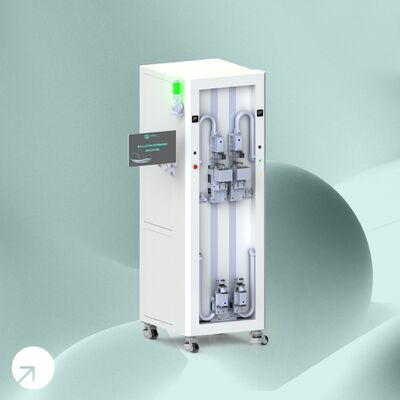
The Dual-Mold Balloon Forming Machine is designed for the high-precision manufacturing of polymer balloons used in medical devices. The system integrates closed-loop control of temperature, stretch force, pressure, and cooling, enabling stable and repeatable production across a wide range of balloon sizes and specifications.
The platform supports flexible process recipe configuration, allowing users to define, control, and monitor each forming step according to their proprietary processes. An optional per-balloon data acquisition and traceability module records forming parameters for each balloon, supporting single-piece monitoring and historical data analysis for quality and process optimization.
Dual-Mold vertical configuration
The vertical dual-mold design allows simultaneous loading of two preforms per cycle. Balloon forming is performed using calibrated, high-consistency water jackets and molds. Combined with mold heating profile fitting and rapid cooling technology, the system produces two balloons per cycle with high dimensional consistency and process repeatability.
User-defined process recipes
Each process recipe consists of N sequential steps executed in order. Each step includes control parameters such as temperature, stretch force, and pressure. Step transitions can be triggered automatically when defined parameter thresholds are reached, or advance directly if no conditions are specified. In addition, complex logical control between steps is supported. This structure enables flexible adaptation to different materials, sizes, and forming processes.
Real-time process monitoring
The HMI displays real-time values for temperature, pressure, servo position, and motor current, with trend curves available for process observation and analysis.
Mold water-cooling system
An external chiller enables rapid cooling of heated molds, achieving cooldown to near-ambient temperature in as fast as 10 seconds. The cooling loop includes an air-purge channel to remove residual water from the mold exterior, ensuring stable and repeatable conditions for subsequent forming cycles.
Supervisory system communication
The machine supports communication with host computers and manufacturing networks, enabling controlled production, reduced operator dependency, and improved production management. This architecture is suitable for integration with MES and factory information systems.
SQL-based data storage and traceability
Critical process data and time-stamped parameters are stored in an SQL database, enabling historical data retrieval and full process traceability for regulated manufacturing environments.
Customized visualization solutions
Process and equipment data can be integrated into customized visualization dashboards, improving data accessibility and supporting customer-specific monitoring and reporting requirements.
|
|
The Dual-Mold Balloon Forming Machine is designed for the high-precision manufacturing of polymer balloons used in medical devices. The system integrates closed-loop control of temperature, stretch force, pressure, and cooling, enabling stable and repeatable production across a wide range of balloon sizes and specifications.
The platform supports flexible process recipe configuration, allowing users to define, control, and monitor each forming step according to their proprietary processes. An optional per-balloon data acquisition and traceability module records forming parameters for each balloon, supporting single-piece monitoring and historical data analysis for quality and process optimization.
Dual-Mold vertical configuration
The vertical dual-mold design allows simultaneous loading of two preforms per cycle. Balloon forming is performed using calibrated, high-consistency water jackets and molds. Combined with mold heating profile fitting and rapid cooling technology, the system produces two balloons per cycle with high dimensional consistency and process repeatability.
User-defined process recipes
Each process recipe consists of N sequential steps executed in order. Each step includes control parameters such as temperature, stretch force, and pressure. Step transitions can be triggered automatically when defined parameter thresholds are reached, or advance directly if no conditions are specified. In addition, complex logical control between steps is supported. This structure enables flexible adaptation to different materials, sizes, and forming processes.
Real-time process monitoring
The HMI displays real-time values for temperature, pressure, servo position, and motor current, with trend curves available for process observation and analysis.
Mold water-cooling system
An external chiller enables rapid cooling of heated molds, achieving cooldown to near-ambient temperature in as fast as 10 seconds. The cooling loop includes an air-purge channel to remove residual water from the mold exterior, ensuring stable and repeatable conditions for subsequent forming cycles.
Supervisory system communication
The machine supports communication with host computers and manufacturing networks, enabling controlled production, reduced operator dependency, and improved production management. This architecture is suitable for integration with MES and factory information systems.
SQL-based data storage and traceability
Critical process data and time-stamped parameters are stored in an SQL database, enabling historical data retrieval and full process traceability for regulated manufacturing environments.
Customized visualization solutions
Process and equipment data can be integrated into customized visualization dashboards, improving data accessibility and supporting customer-specific monitoring and reporting requirements.

